
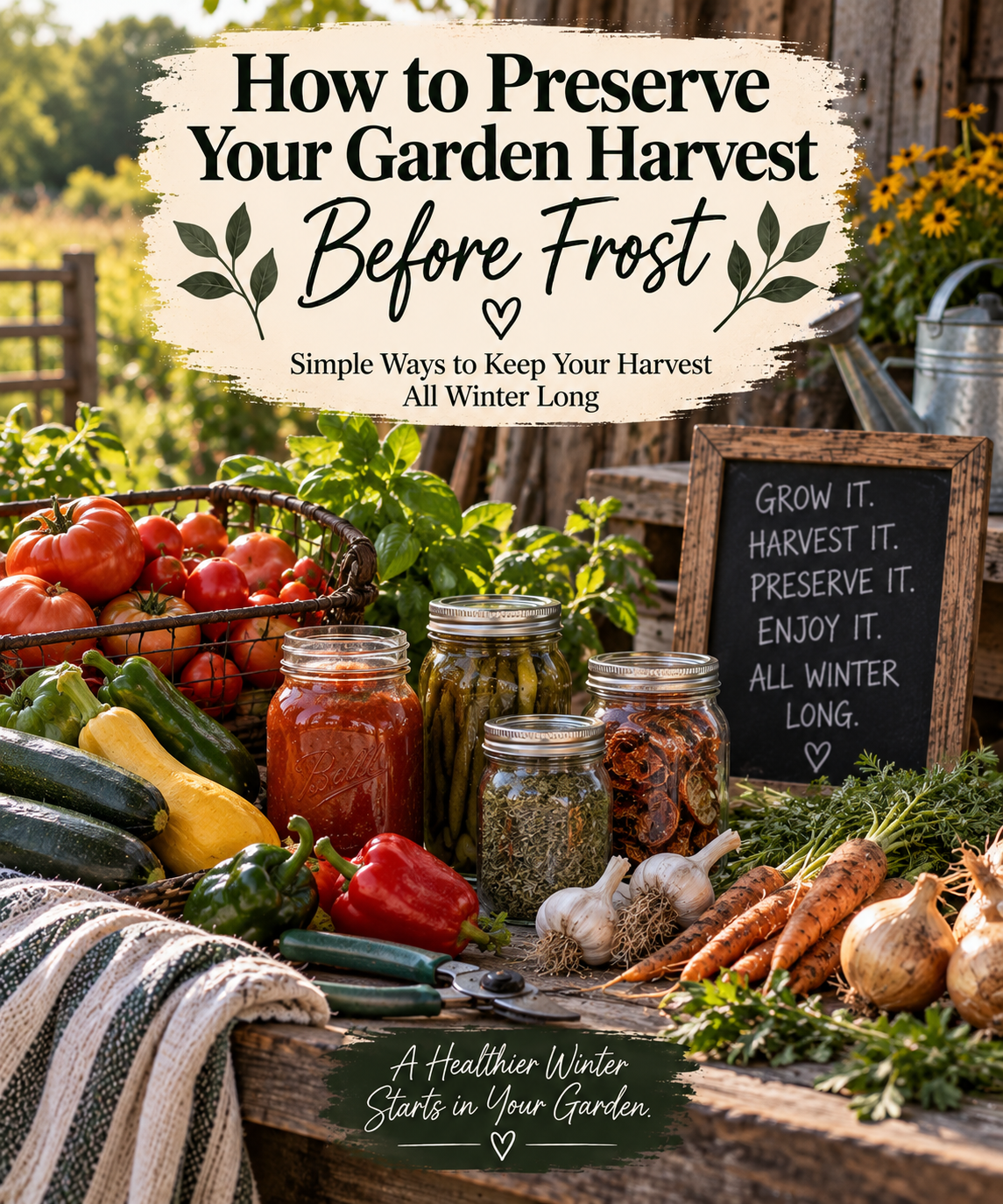
The first frost has a way of sneaking up on you.
One minute, you’re picking tomatoes and peppers in the sunshine.
Then you look at the forecast and suddenly realize:
It’s time to get everything out of the garden.
Instead of scrambling at the last minute, I like to think of the weeks before frost as preservation season.
Start With the Most Frost-Sensitive Plants
Tomatoes, peppers, cucumbers, basil and other warm-season crops deserve attention first.
Cool-season crops may tolerate colder conditions better, so you don’t necessarily need to harvest the entire garden at once.
Freeze What You Can’t Deal With Yet
Freezing is one of my favorite preservation methods simply because it’s forgiving.
If you’re overwhelmed with produce, freeze appropriate crops now and decide what you’re making with them later.
A freezer can be your garden’s pause button.
Dehydrate
Herbs are obvious candidates, but many fruits and vegetables can also be dehydrated.
Drying reduces storage space dramatically and gives you ingredients you can use throughout winter.
Can Your Harvest Safely
Canning can create shelf-stable food, but it’s one preservation method where I don’t recommend improvising.
High-acid foods may be suitable for water-bath canning when following tested recipes.
Low-acid vegetables generally require pressure canning.
Always use a current, research-tested recipe from a reliable home-food-preservation source.
Store Crops That Don’t Need Immediate Processing
Some vegetables are designed to store.
Depending on the crop and how it was grown and harvested, potatoes, onions, garlic and winter squash can potentially be cured or stored rather than immediately canned or frozen.
Preserve Your Herbs
Harvest tender herbs before damaging frost.
Depending on the herb, you can dry, freeze or bring plants indoors.
Make a Priority Pile
When a huge harvest comes inside, sort it.
Use first: damaged or very ripe produce.
Preserve next: good produce that won’t store long.
Store: crops suitable for longer-term storage.
That little system can prevent a mountain of vegetables from becoming overwhelming.
Don’t Try to Save Everything
Some things won’t make it.
That’s okay.
Preserving food should help your household—not turn the end of gardening season into a panic.
Save what you’ll actually eat.
Every jar, freezer bag and bundle of dried herbs is food you grew and carried into another season.
That’s a win.
Leave a Reply