
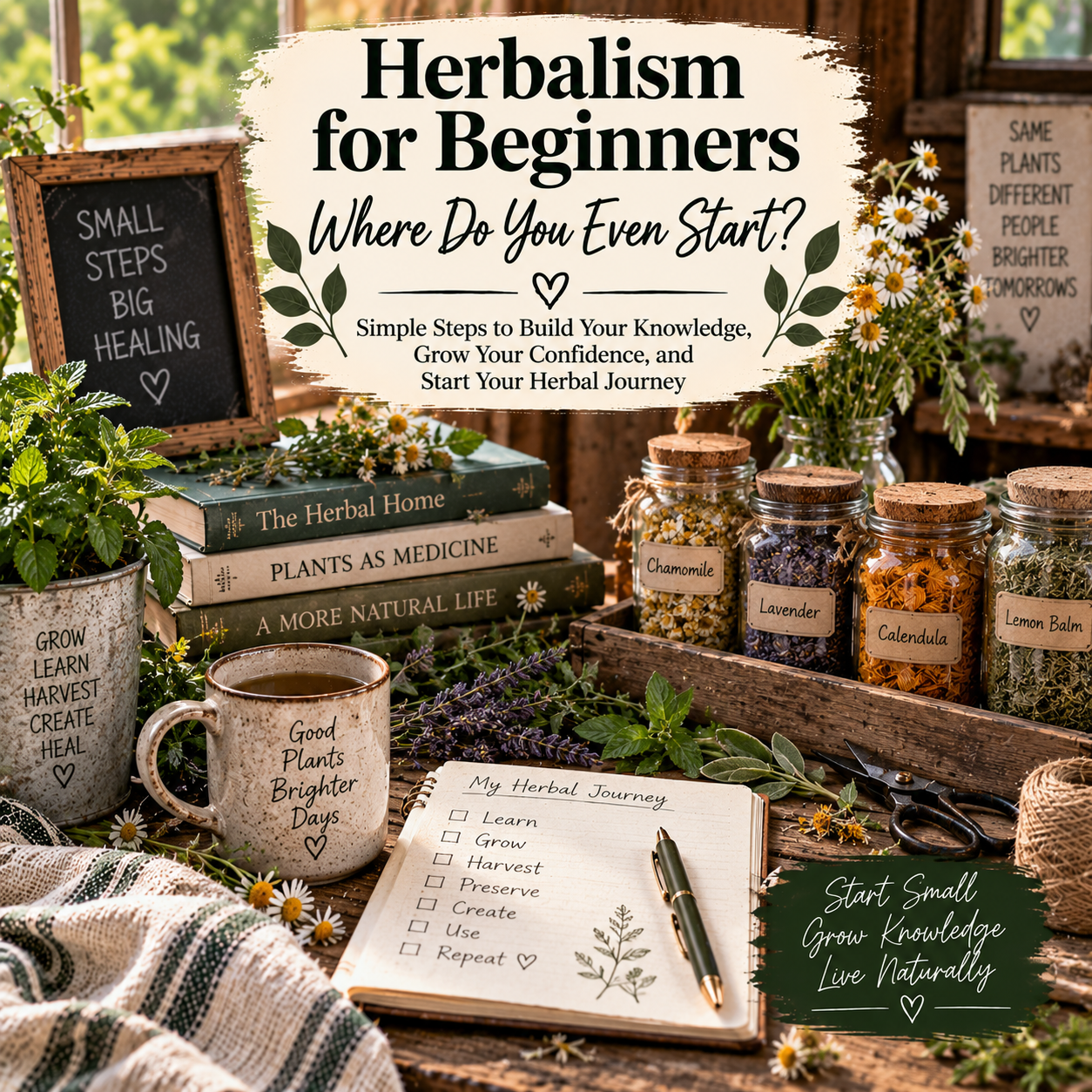
Herbalism can feel overwhelming when you first start.
Tinctures. Infusions. Decoctions. Salves. Herbal oils.
Then there are hundreds of plants you’re apparently supposed to recognize.
But you don’t need a cabinet filled with 100 herbs to start learning herbalism.
Start with a few plants and learn them well.
What Is Herbalism?
Herbalism is the traditional practice of using plants and plant preparations for wellness, food, body care and other household purposes.
Humans have used plants this way for generations, but traditional use doesn’t automatically mean something has been scientifically proven to treat a medical condition.
I like looking at herbalism as another homestead skill: learning the plants around us and understanding how they have traditionally been used.
Start With Five Herbs
Instead of buying everything, choose a handful of relatively familiar herbs.
A beginner collection might include:
- Calendula
- Chamomile
- Lavender
- Peppermint
- Lemon balm
Learn each plant individually.
What part is used?
When is it harvested?
How is it dried?
How has it traditionally been used?
Are there safety concerns or medication interactions?
Learn One Preparation at a Time
Start with something simple.
Herbal Tea
Herbs are steeped in hot water.
Infused Oil
Plant material is infused into a carrier oil.
Salve
An infused oil is combined with wax to create a semi-solid topical preparation.
Tincture
Plant constituents are extracted into alcohol or another appropriate solvent.
You don’t need to learn all four this weekend.
Learn Identification Before Foraging
This is incredibly important.
Never consume a wild plant because an app, photo or social-media post told you what it was.
Some harmless plants have dangerous look-alikes.
Learn identifying characteristics, habitat, season and potential look-alikes—and use reliable field references.
If you’re uncertain, don’t use it.
Keep an Herbal Notebook
Write down:
- Plant name
- Botanical name
- Source
- Date harvested or purchased
- Preparation
- Ingredients
- Amounts
- Date made
- Safety information
That notebook becomes incredibly valuable as you learn.
You Don’t Need to Know Everything
Start with one plant.
Learn it.
Grow it.
Harvest it.
Dry it.
Make something simple.
Then learn another.
That’s how traditional skills become part of everyday life.
A Note About Herbal Safety
Plants can cause allergic reactions and interact with medications, and some aren’t appropriate during pregnancy, breastfeeding, childhood or certain medical conditions.
Herbal preparations shouldn’t replace necessary medical care. If you’re using an herb for a health condition or take medication, check with an appropriate healthcare professional or pharmacist.
Herbalism isn’t about knowing every plant in the forest. It’s about learning to respect and understand the plants you choose to use.