
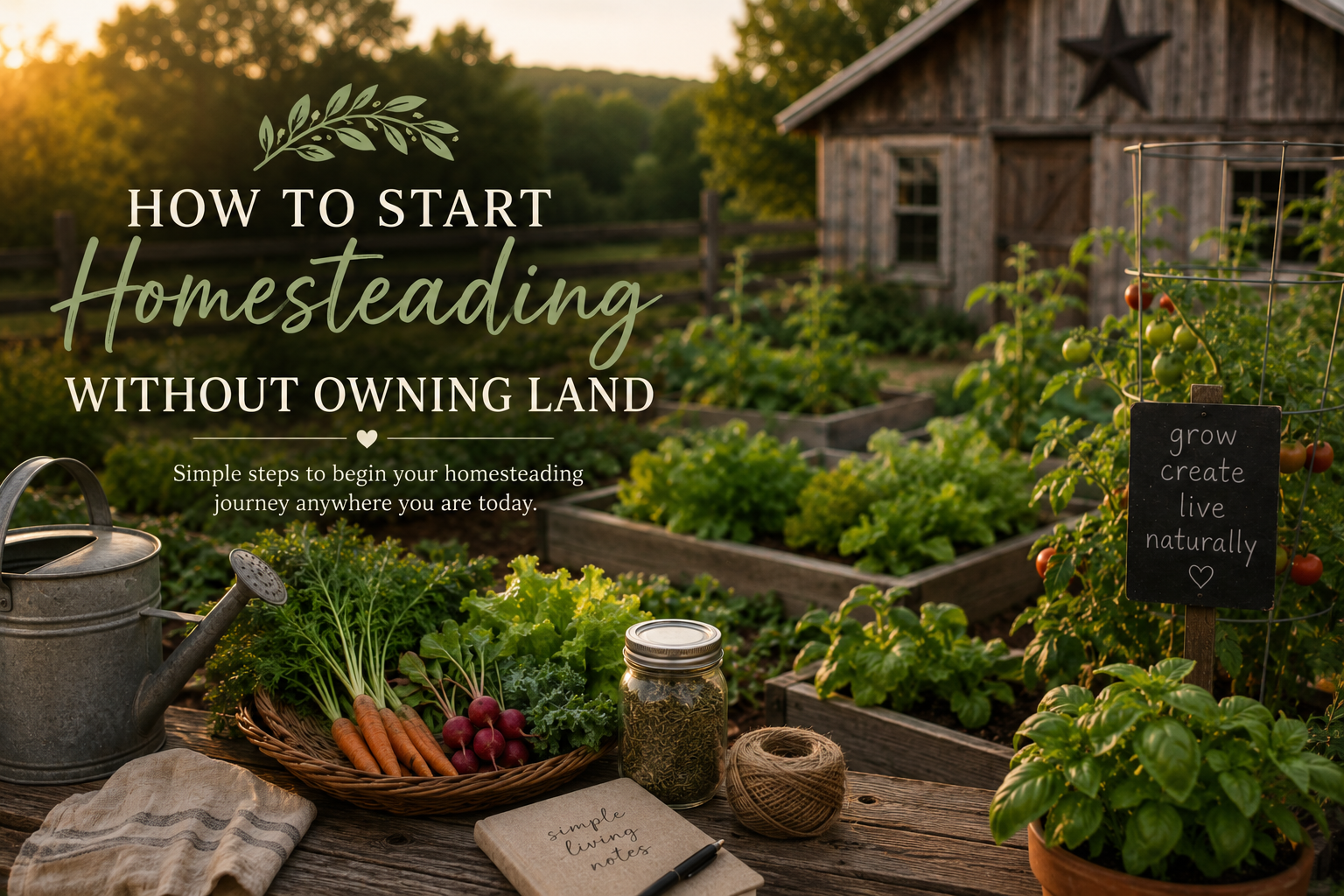
The word homesteading often brings to mind acres of farmland, barns full of animals, and endless gardens stretching across the countryside. While that may be the dream for some, the truth is that you don’t need 20 acres—or even one acre—to begin living a homesteading lifestyle.
Homesteading is about becoming more self-sufficient, learning practical skills, and making intentional choices. Whether you live in an apartment, a suburban neighborhood, or a small town, you can start building a homestead right where you are.
When I first became interested in homesteading, I realized that it wasn’t about how much land I had—it was about taking one step at a time. Every loaf of homemade bread, every herb I grew, and every new skill I learned brought me closer to the lifestyle I wanted.
What Is Homesteading?
Homesteading is the practice of producing more of what you use instead of relying entirely on stores or outside services. It can include gardening, baking bread, preserving food, raising animals, making natural products, and learning traditional skills.
More than anything, it’s about living intentionally.
Start with Food
One of the easiest ways to begin homesteading is by growing something you can eat.
You don’t need a large garden. Herbs, lettuce, tomatoes, peppers, and strawberries all grow well in containers on a porch or patio. Even a sunny windowsill can produce fresh herbs throughout the year.
Watching your first seed sprout is incredibly rewarding, and it reminds you that food doesn’t have to come from a grocery store.
Learn to Bake
Few things feel more rewarding than baking your own bread.
Sourdough is one of my favorite traditional skills because it requires only flour, water, salt, and patience. Once you have a healthy sourdough starter, you can make bread, pizza dough, cinnamon rolls, biscuits, pancakes, and so much more.
Learning to bake from scratch saves money while giving you complete control over your ingredients.
Cook More from Scratch
You don’t have to eliminate every convenience food overnight.
Start by making one homemade item each week.
Ideas include:
- Bread
- Pizza dough
- Soup
- Salad dressing
- Jam
- Granola
- Yogurt
Every homemade meal builds confidence.
Preserve Food
Learning to preserve food is another important homesteading skill.
Try:
- Freezing vegetables
- Drying herbs
- Dehydrating fruit
- Making freezer meals
- Water bath canning
- Pressure canning
These skills help reduce waste while allowing you to enjoy seasonal produce year-round.
Reduce Waste
Homesteading often goes hand in hand with reducing waste.
Simple ways to start include:
- Composting kitchen scraps
- Reusing glass jars
- Making cloth napkins
- Growing herbs instead of buying fresh packages every week
- Repairing items instead of replacing them
Small changes add up over time.
Learn Traditional Skills
Homesteading is full of opportunities to learn.
Some great beginner skills include:
- Gardening
- Sewing
- Soap making
- Candle making
- Herbal remedies
- Bread baking
- Food preservation
- Composting
Choose one skill at a time instead of trying to master everything at once.
Build Slowly
One mistake many beginners make is trying to do everything immediately.
You don’t need chickens, goats, bees, and a huge garden in your first year.
Instead, ask yourself:
“What can I learn this month?”
Maybe it’s growing lettuce.
Maybe it’s baking bread.
Maybe it’s preserving tomatoes.
Every skill builds upon the last.
Homesteading Is a Journey
There’s no finish line.
Even experienced homesteaders are constantly learning new skills, experimenting with different gardening methods, and improving their homes.
Progress is far more important than perfection.
Final Thoughts
You don’t need acres of land to begin homesteading.
You simply need a willingness to learn.
Whether you start with one basil plant on your windowsill or your first loaf of homemade sourdough, you’re taking a meaningful step toward a simpler, more intentional life.
Remember, every expert was once a beginner.
Start small.
Keep learning.
Enjoy the journey.
Welcome to the world of homesteading.