
You just brought a basket full of vegetables inside.
Now comes the next question:
What am I supposed to do with all of this?
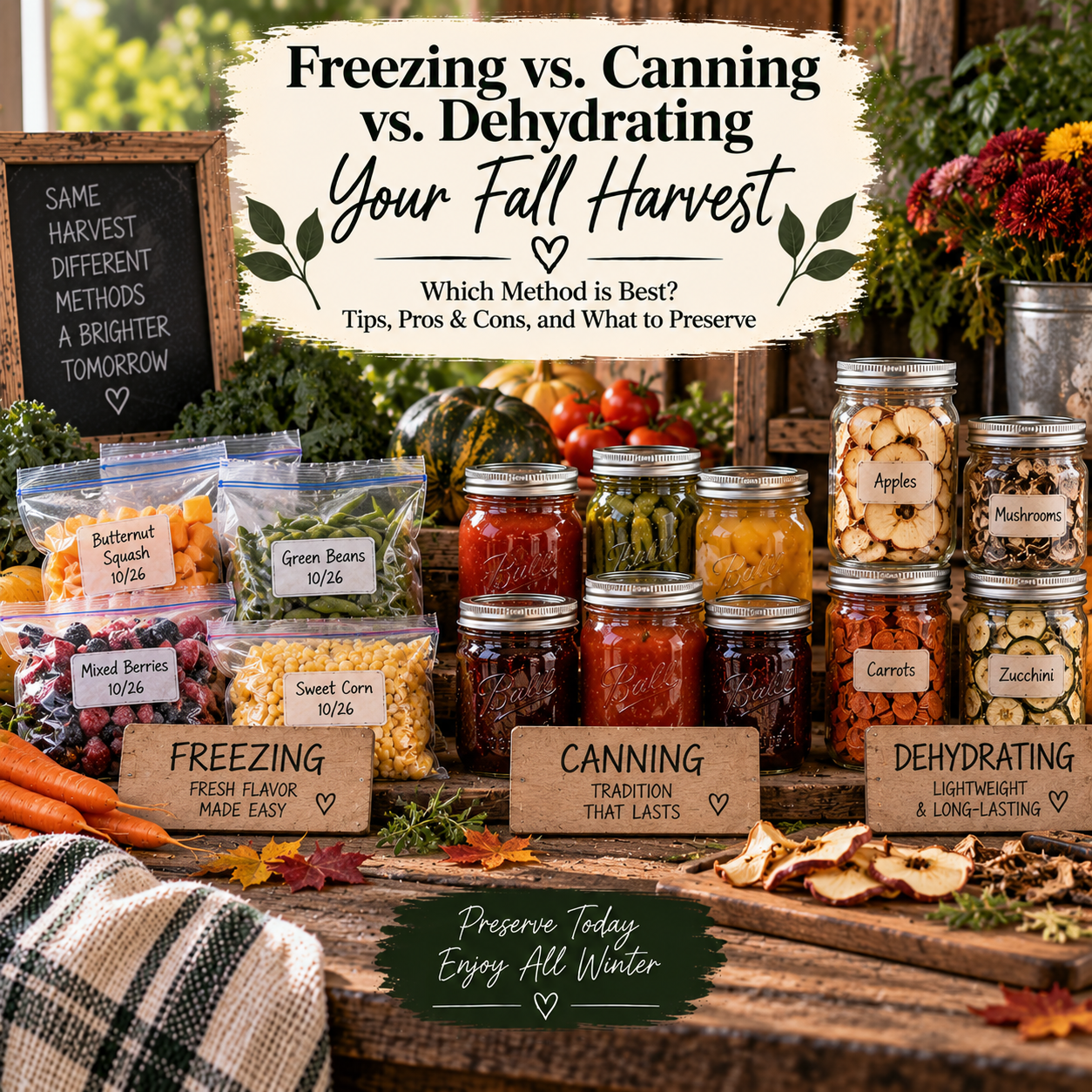
Freezing?
Canning?
Dehydrating?
There isn’t one preservation method that’s best for everything.
Here’s how I think about it.
Freezing
Freezing is usually the easiest place for beginners to start.
I like freezing when:
- I’m short on time
- The food will eventually be cooked
- I have freezer space
- I want simple portioning
- Texture after thawing isn’t a major concern
The downside?
Freezers have limited space and depend on electricity.
Canning
Canning is valuable because properly processed jars can be stored without taking up freezer space.
It’s especially useful when you’re trying to build a pantry.
But canning requires the most attention to food-safety rules.
Water-Bath Canning
This method is intended for appropriately acidic foods and tested acidified recipes.
Pressure Canning
Low-acid vegetables, meats and many other low-acid foods require pressure canning for safe shelf-stable preservation.
An electric pressure cooker or Instant Pot should not automatically be treated as a pressure canner. Use equipment and methods specifically validated for home canning.
I always recommend following current tested recipes from sources such as the National Center for Home Food Preservation or USDA guidance.
Dehydrating
Dehydrating is one of my favorite options when storage space matters.
Removing moisture dramatically reduces the size and weight of many foods.
I like dehydrating for:
- Herbs
- Certain fruits
- Certain vegetables
- Ingredients intended for soups or cooking
- Foods I want to store compactly
The key is removing enough moisture and storing the finished food appropriately so mold and spoilage don’t become a problem.
So Which Method Should You Choose?
Ask yourself four questions:
How will I eventually use this food?
How much freezer space do I have?
Do I want shelf-stable storage?
How much time do I have today?
Sometimes the answer is all three.
A basket of peppers might become:
Some fresh peppers for dinner.
Some frozen peppers for winter cooking.
Some dehydrated peppers for seasoning.
And some safely pickled using a tested recipe.
Preservation Doesn’t Have to Be Perfect
You don’t need a pantry containing 500 matching jars to preserve food.
Start with what you have.
Freeze one bag.
Dry one bundle of herbs.
Learn one tested canning recipe.
Then learn another.
Growing food is only half the skill.
Learning how to keep it is where your garden starts feeding you long after the growing season ends.
Leave a Reply