
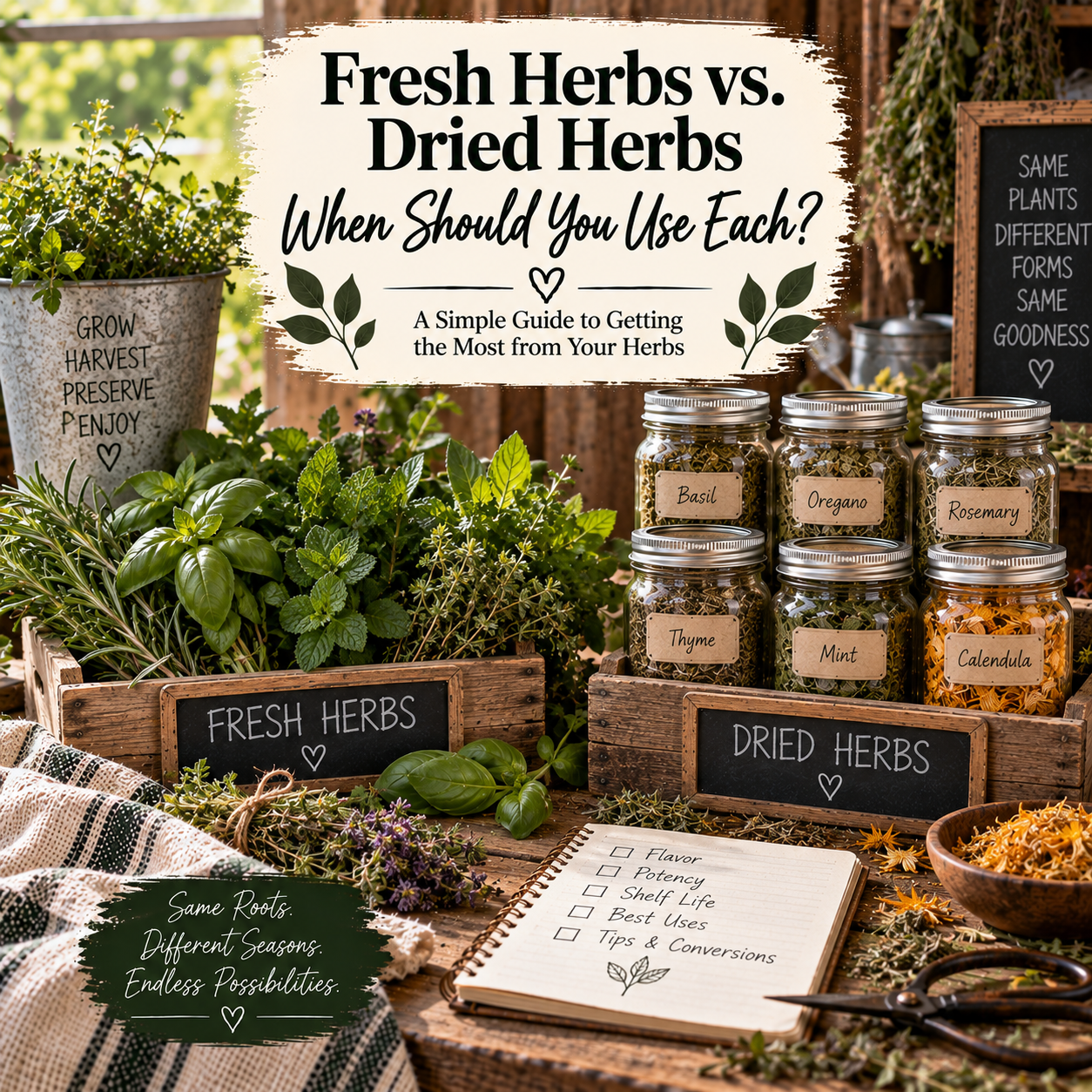
You walk outside and harvest a beautiful handful of herbs.
Then the recipe you’re following says:
Use dried herbs.
Can you just use the fresh ones?
Sometimes—but fresh and dried herbs aren’t always interchangeable.
Fresh Herbs Contain Water
Fresh plant material contains substantial moisture.
That affects its weight, concentration and shelf stability.
It’s also why fresh herbs require extra care in preparations involving oil: introducing moisture into an oil preparation can increase spoilage concerns.
Drying Changes the Plant
Removing water concentrates the plant material by weight and can change its flavor, aroma and chemical composition.
Some herbs retain their qualities beautifully after drying.
Others are particularly enjoyable fresh.
Fresh Herbs Are Great for…
Depending on the individual herb:
- Cooking
- Fresh herbal teas
- Garnishes
- Certain appropriately formulated tinctures
- Immediate-use preparations
Dried Herbs Are Great for…
- Long-term storage
- Tea blends
- Infusions
- Many oil infusions
- Salves
- Keeping an herbal pantry
Which Is Stronger?
There isn’t one universal answer.
Drying removes water, meaning dried material is generally more concentrated by weight than fresh material.
But some volatile compounds can be lost during drying.
That’s why herbal recipes should specify whether they’re formulated for fresh or dried plant material.
Don’t Substitute Blindly
If you’re following a preparation formula, use the form it calls for whenever possible.
Fresh-to-dried conversions aren’t identical across every herb or preparation.
Grow Fresh. Preserve the Extra.
During summer, I love the idea of walking outside and harvesting what I need.
But winter changes everything.
Drying part of the harvest gives those plants a life beyond gardening season.
And that’s one of my favorite parts of homesteading:
Learning how to carry one season into the next.
Leave a Reply