
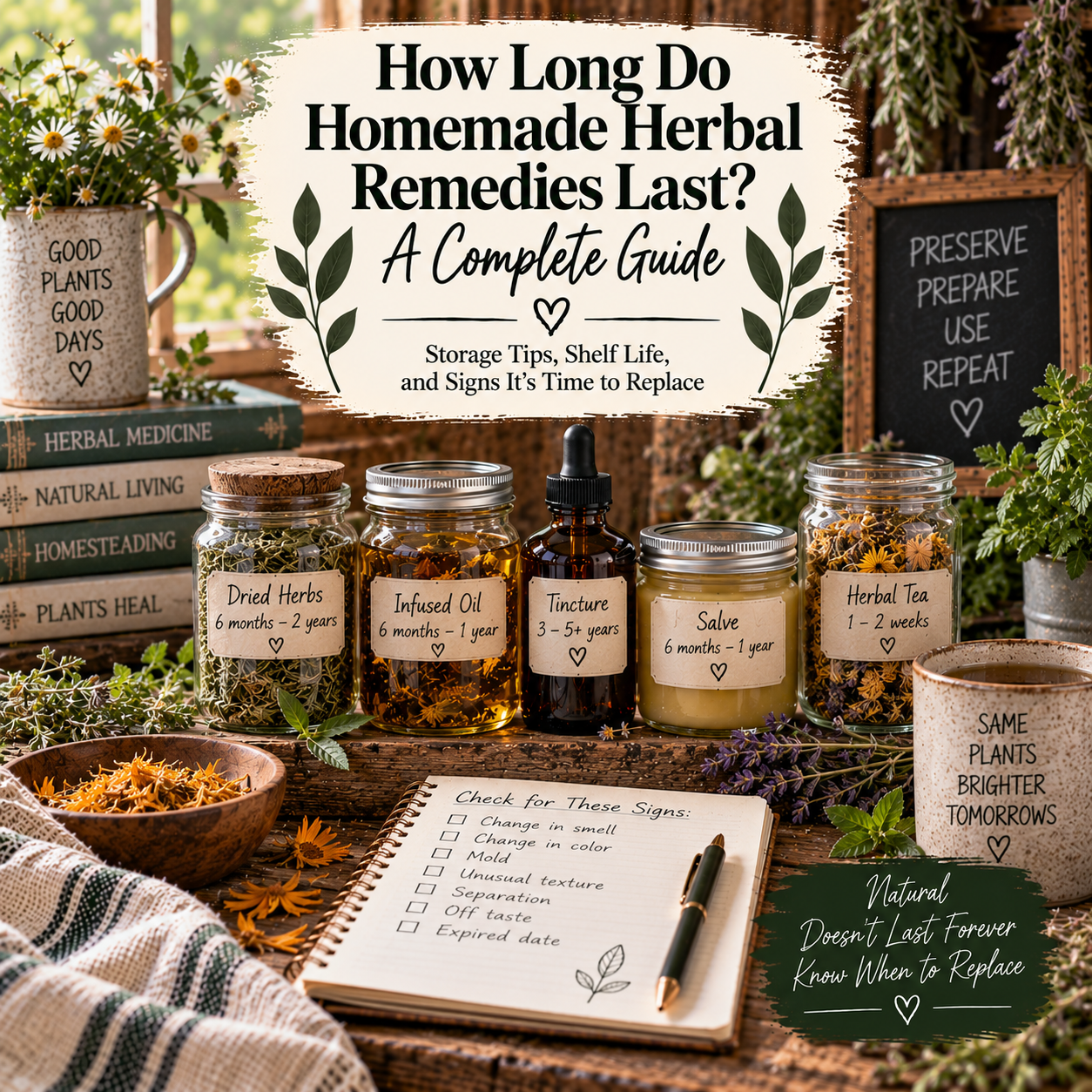
One of the easiest mistakes to make when creating homemade herbal products is assuming that because something is “natural,” it lasts forever.
It doesn’t.
Herbal preparations can spoil.
And different preparations have dramatically different storage lives.
Dried Herbs
Properly dried herbs generally maintain their best quality longer when stored somewhere cool, dark and dry in an airtight container.
Rather than relying only on a date, periodically check their aroma, color and condition.
Any sign of mold or moisture means they should be discarded.
Herbal Tea
Once water enters the picture, shelf life becomes short.
Freshly prepared herbal teas and water-based infusions should generally be treated as perishable foods and refrigerated if they aren’t consumed promptly.
Herbal Infused Oils
Oil preparations can become rancid.
Moisture from fresh plant material can introduce additional spoilage concerns, which is why beginners are often better served by established formulas using properly dried herbs.
Watch for changes in smell, appearance or texture.
Herbal Salves
A salve made entirely from oils and waxes contains very little water, which generally makes it more stable than a water-containing cream.
However, the oils can still oxidize and become rancid.
Its usable life depends heavily on the ingredients, preparation and storage.
Tinctures
Properly prepared alcohol-based tinctures can be among the longer-lasting herbal preparations because alcohol acts as a preservative.
Exact shelf life depends on the alcohol concentration, plant material and storage conditions.
Water Changes Everything
This is one of the most important beginner lessons.
Adding water, aloe, tea, hydrosol or another water-based ingredient to a homemade product creates a very different preservation problem.
An oil-and-wax balm is not the same as a homemade lotion.
Water-containing products can support microbial growth and may require properly formulated broad-spectrum preservation.
When in Doubt, Throw It Out
Discard a preparation if you notice:
- Mold
- Unexpected fermentation
- Gas or pressure
- Unusual texture
- Off odors
- Signs of contamination
Saving a few dollars isn’t worth gambling on a questionable jar.
Label and Date Everything
The simplest way to manage homemade products is to know exactly when you made them.
Natural living isn’t about pretending nature can’t spoil.
It’s about understanding it well enough to work with it safely.
Leave a Reply