
We’ve all done it.
You find a recipe calling for fresh herbs…
and all you have is a jar of dried herbs.
Or your garden is overflowing with fresh herbs while the recipe calls for dried.
Can you substitute them?
For ordinary culinary cooking, there’s a useful starting point.
The Common 3-to-1 Rule
A frequently used kitchen guideline is:
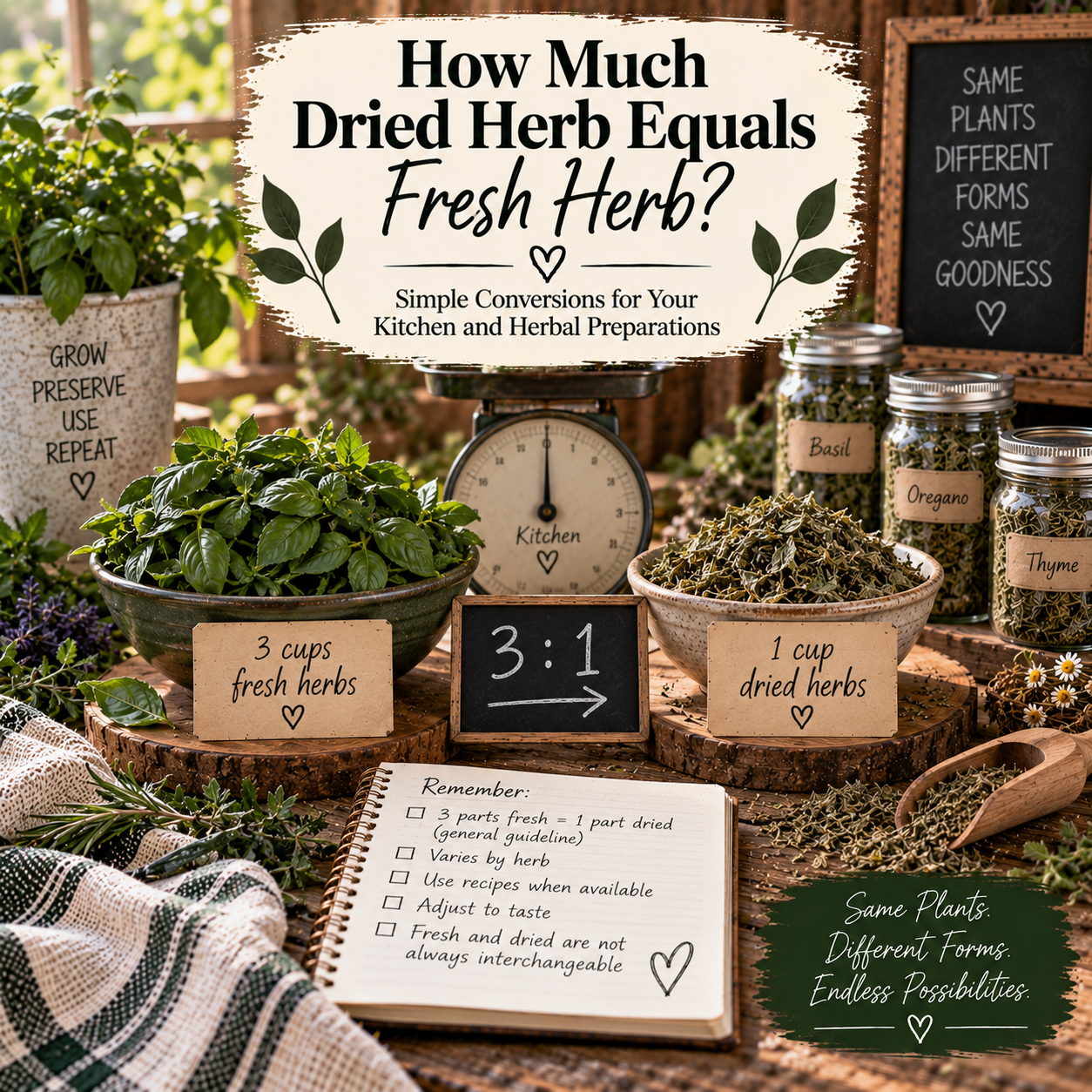
3 parts fresh herbs ≈ 1 part dried herbs
So if a cooking recipe calls for:
1 tablespoon fresh herbs, you might start with approximately 1 teaspoon dried herbs.
Why?
Fresh herbs contain considerably more water, while dried herbs are more concentrated.
But It’s Only a Guideline
Not every herb behaves identically.
The age and quality of dried herbs matter.
So does the specific herb.
Start conservatively and adjust your food to taste.
Herbal Preparations Are Different
This is important.
The kitchen 3-to-1 guideline shouldn’t automatically be applied to medicinal-style preparations, tinctures or other herbal formulas.
Those preparations may use specific ratios based on weight, moisture content, extraction method and the particular plant.
Follow a trusted formula that specifies whether it uses fresh or dried material.
Label Your Dried Herbs
Include:
- Common name
- Botanical name when appropriate
- Date harvested/purchased
- Date dried
Over time, dried herbs lose flavor, aroma and quality.
Use Your Senses
For culinary herbs, smell them.
Rub a little between your fingers.
Does that basil still smell like basil?
If the jar smells mostly like dusty leaves, replacing it might be better than simply adding twice as much.
Simple skills like this make cooking from scratch easier.
You don’t need perfect measurements for every pot of soup.
Sometimes you just need to know what you’re working with.
Leave a Reply