
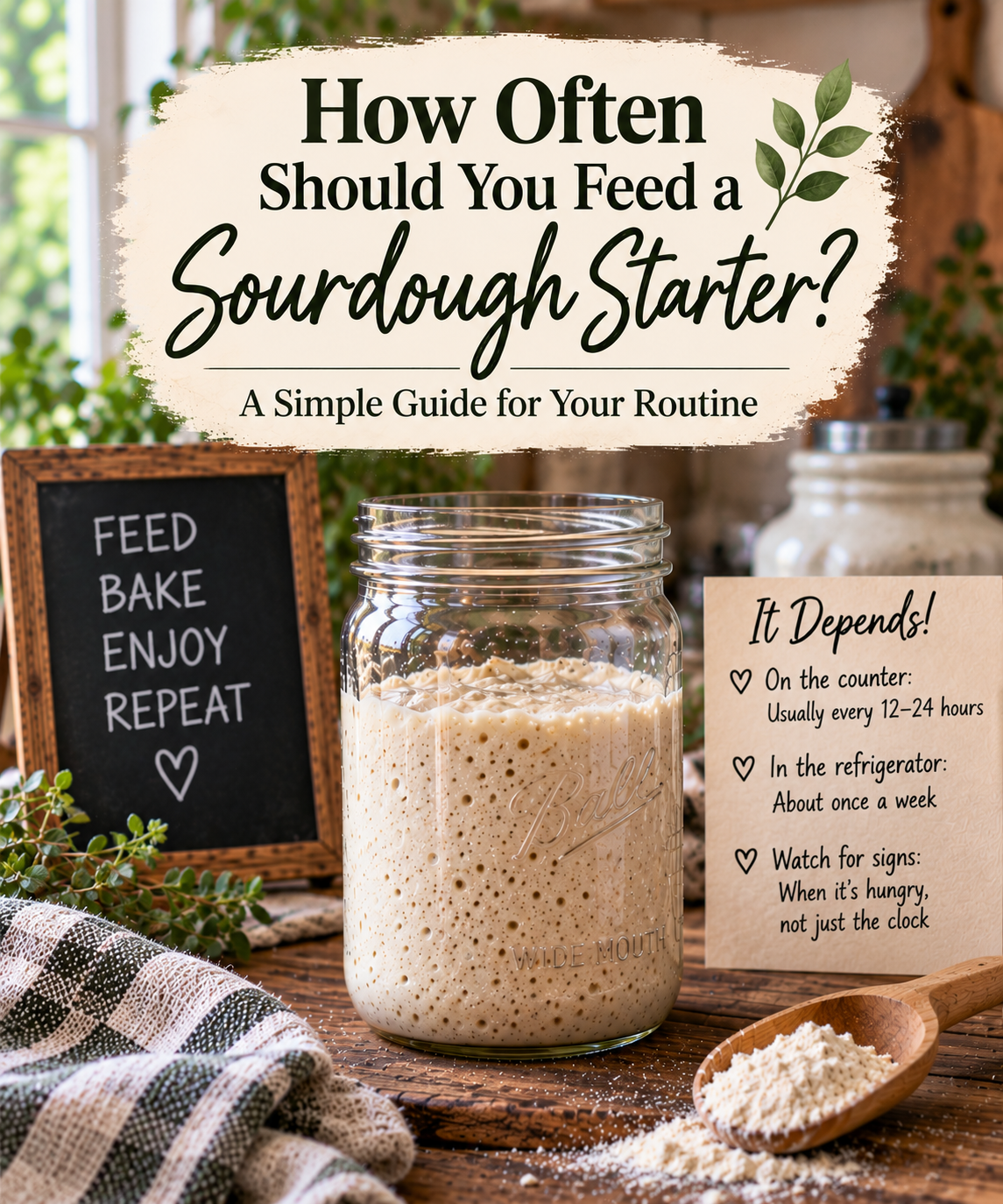
One of the first questions I had about sourdough was:
Am I seriously supposed to feed this thing every day forever?
Thankfully, no.
How often you feed a sourdough starter depends largely on where you keep it and how often you bake.
If You Keep Your Starter on the Counter
A starter kept at room temperature remains much more active than one stored in the refrigerator.
Many bakers maintaining a room-temperature starter feed approximately every 12–24 hours, although your actual schedule depends on temperature, feeding ratio and how quickly your particular starter consumes its food.
Rather than blindly following the clock, learn what your starter looks like when it’s hungry.
If You Keep It in the Refrigerator
If you’re an occasional baker, refrigeration makes sourdough much easier to maintain.
Cold temperatures slow fermentation considerably.
Many home bakers maintain refrigerated starters with roughly weekly feedings, although established starters and individual routines vary.
Before baking, you may want to bring the starter out and give it one or more room-temperature feedings until it’s active again.
Watch Your Starter, Not Just Your Clock
Your starter will teach you its routine.
After feeding, it should begin fermenting, expand, reach a peak and eventually fall.
Marking the jar immediately after feeding is one of the simplest ways to learn this cycle.
Build a Routine That Fits Your Life
You don’t need to become a servant to a jar of flour.
If you bake constantly, counter storage might make sense.
If you bake once every week or two, refrigeration may be much more practical.
Sourdough should become part of your life—not take it over.
Need a Starter?
Our Lettuce Live Living dehydrated sourdough starter can be reactivated at home and maintained for future baking.
Once you learn the rhythm, keeping a starter becomes surprisingly simple.
Leave a Reply