
When you’re new to sourdough, the terminology can make everything sound much more complicated than it really is.
Starter.
Active starter.
Discard.
Levain.
What’s actually in all these jars?
Let’s start with two of the most common terms: starter and discard.
What Is Sourdough Starter?
Sourdough starter is a fermented mixture of flour and water containing a community of wild yeasts and lactic-acid bacteria.
When maintained and fed, that culture can be used to ferment dough.
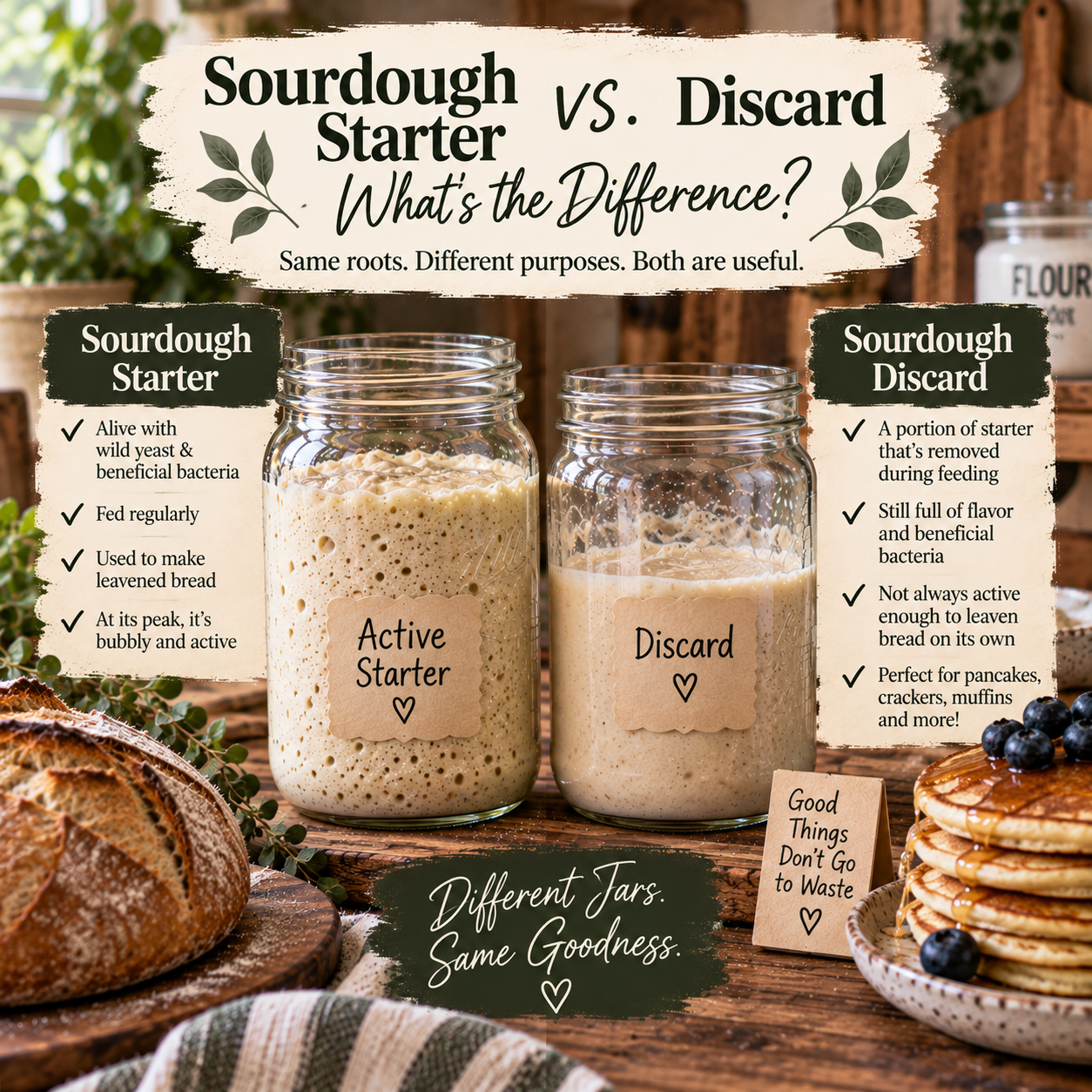
An active starter is generally one that has recently been fed and is showing strong fermentation activity.
What Is Sourdough Discard?
Discard is simply a portion of your starter that you remove during the maintenance or feeding process.
It isn’t automatically garbage.
It’s still fermented flour and water.
However, discard that isn’t at peak leavening activity may not be appropriate as the sole leavening power in a recipe designed for active starter.
Why Do We Discard Any?
Imagine keeping every bit of starter and adding more flour and water every time you fed it.
Your starter would quickly become enormous.
Removing a portion keeps the culture at a manageable size and allows you to feed the remaining starter an appropriate amount of fresh flour and water.
Do You Have to Throw Discard Away?
No!
That’s where sourdough gets fun.
Depending on the recipe and condition of the discard, you can use it in things like:
- Pancakes
- Crackers
- Waffles
- Muffins
- Flatbreads
- Pizza dough
- Quick breads
- Biscuits
There are entire recipes designed specifically around discard.
Active Starter vs. Discard
Think of active starter as your working leavener when a sourdough recipe depends on fermentation for its rise.
Think of discard as a fermented ingredient you can incorporate into recipes designed to use it.
Once you understand that distinction, sourdough recipes become much easier to read.
And suddenly that “waste” jar in the refrigerator starts looking a lot more useful.
Leave a Reply